

Hurricane Melissa: Climate colonialism and the refusal to take responsibility

‘What we call climate change is not merely an environmental phenomenon; it is a historical process, rooted in the violent transformations that began with European colonization of Abya Yala/Latin America and globalized through centuries of imperial expansion.’
Hurricane Melissa began as a tropical storm on 21 October 2025, before quickly intensifying into a Category 5 hurricane – the strongest categorisation – and first making landfall in southwestern Jamaica. While it also impacted Cuba, where it next made landfall as a much less intense hurricane, as well as Haiti, the Bahamas, Bermudas and the Dominican Republic, it was in Jamaica that it caused the most catastrophic impacts, the after-effects of which are still felt today.
Around 1.5 million people, over half the population, were immediately affected through loss of housing, livelihoods and power and water outages. Some 90,000 families have had to contend with severe damage to their homes as the storm ripped off the roofs of over 120,000 structures. It is estimated that 25,000 people had to stay in emergency shelters in the immediate aftermath, with many still displaced as they embark on rebuilding their homes and lives.
Hospitals, fire stations, schools and other public buildings were also severely damaged or destroyed, consequently leading to massive disruptions in medical care and education (more than two-thirds of the country’s public schools were damaged, some still not open three months later). The hurricane led to significant flooding, which was another substantial cause of damage to both infrastructure and agriculture. There were also outbreaks of mosquito-borne illnesses after the storm, which put additional pressure on the already decimated healthcare system. More than a hundred people are known to have died as a result of Hurricane Melissa, over half of them in Jamaica.
It goes without saying that the impacts of the hurricane have been huge – on people’s day-to-day lives, on their mental and physical health, on their ability to provide for themselves and their families. Many have experienced loss of income, which has severely compounded the challenges they have had to face. The list goes on: there are countless other ramifications I could mention, which speaks to the magnitude of what happened.
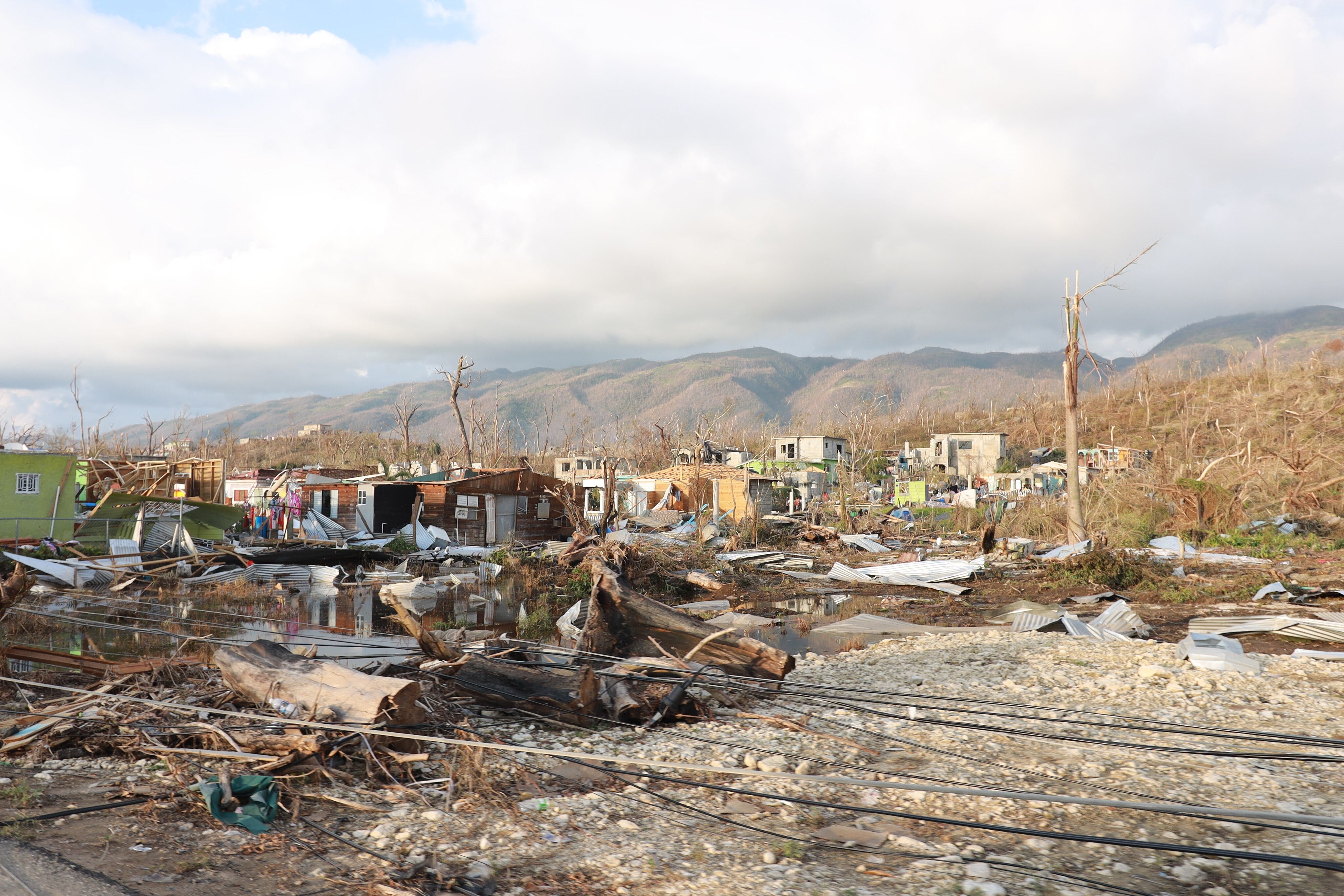
Damage to houses and forests in Jamaica from Hurricane Melissa. Image credit: World Central Kitchen, CC BY 4.0, via Wikimedia Commons
One of the main talking points across news media and humanitarian reporting has been the fact that this was one of the most intense Atlantic hurricanes on record and the strongest to ever make landfall in Jamaica. Unsurprisingly, this led to a flurry of reporting on climate change. An AP News headline notes ‘Climate change boosted Hurricane Melissa’s destructive winds and rain, analysis finds’. Sky News leads with a similar headline, stating that ‘Climate change made Hurricane Melissa four times more likely, say scientists’. CNN’s climate section goes for the needlessly sensationalist, announcing, ‘Why Hurricane Melissa turned into a supercharged monster’. While the BBC asks: ‘Was climate change to blame for the strength of Hurricane Melissa?’
I fully understand and appreciate why this question is being asked. As someone interested in loss and damage, I’m acutely aware of the severe impacts of climate breakdown. I also recognise that tropical storms, typhoons and hurricanes are made significantly more likely and more intense by climate change (even while we cannot neatly ascribe climate change as the sole factor for a specific extreme weather event and its fallout).
What bothers me about this kind of mainstream reporting is what it leaves out. All of these articles – of which there are many – prioritise a dramatic narrative of contemporary climate science. There is much about sea temperature, wind speeds, humidity and rainfall. While the articles do (for the most part) make a fleeting reference to the human causes of climate change, there is no recognition of the historical factors behind this or an indication of what the pursuit of justice should look like beyond a cursory acknowledgement that we need to ‘lower emissions’ (most of them don’t even do this). There is also scant attention paid to Jamaica’s social and political realities today.
Of course, these are mainstream news articles written in the wake of a major weather event, ones that have decided to focus on climate change – not an insignificant task given the climate scepticism we have to contend with these days. I certainly don’t expect such articles to fully or even adequately capture the complex bigger picture that Hurricane Melissa is part of. And yet I remain troubled by the willingness to prioritise climate change as a central topic of journalistic focus while at the same time divorcing it from the difficult political questions it raises and relates to.
Because there are many equally pertinent questions to ask alongside what role climate change played. Why hasn’t more financial assistance been provided, given the scale of the devastation? In the wake of such a massive catastrophe, characterised by both contemporary and historical injustices, where are the conversations about reparations? Why is the Fund for Responding to Loss and Damage (FRLD) so appallingly underfunded and what can be done about this? It is a deliberate political choice not to ask and keep asking such questions. It is also hugely telling.
I wanted to write about Hurricane Melissa for my newsletter because it encapsulates so much of what I think is central to understanding loss and damage and the broad web of history and injustice within which it sits: inadequate funding, the lack of accountability, and climate colonialism. The importance of acknowledging this relationship between climate change and the colonial histories that have shaped our planet and its conditions today is summarised well by the Gina Cortés Valderrama and Isadora Cardoso quote at the very start of this newsletter.
This is a historical process characterised by extraction, ecocide, resource exploitation, the elimination of indigenous peoples, slavery and the establishment of the plantation system – centuries of devastating violence and environmental degradation for the sake of extracting maximum profit out of the bodies and land under control. Having been colonised first by the Spanish in 1494 and then the British in 1655 until 1962, Jamaica is very much part of this process. This is a long history of genocide against the island’s indigenous population followed by over three hundred years of slavery imposed on the Jamaicans of African origin, through which colonisers were able to derive massive profits, primarily through sugar cane plantations.
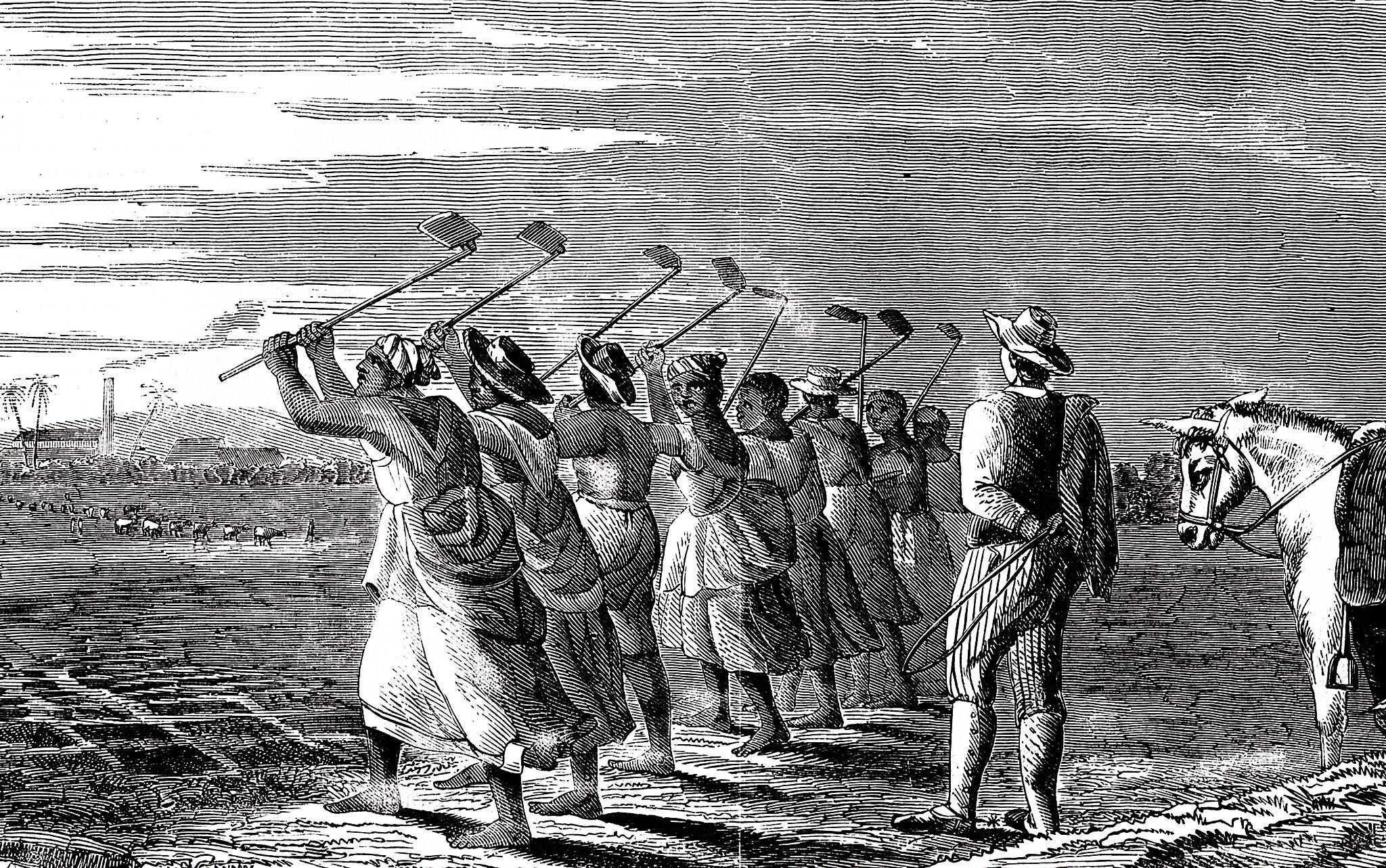
Engraving in The Illustrated London News (9 June 1849) of the brutal work of cane-holing on a sugar cane plantation in Jamaica. Image credit: anonymous, public domain, via Wikimedia Commons
.jpg)
Published shortly after Hurricane Melissa and in conjunction with COP30 in Brazil last year, a report by Mariama Williams on ‘Global Afro-Descendant Climate Justice’ emphasises the structural injustices that exist today because of this history: ‘Afro-Descendant communities worldwide are disproportionately affected by climate change. This differential impact is due to historical and systematic socio-economic inequalities stemming from colonialism, slavery, and ongoing racial discrimination.’
The report provides a wealth of detail into the climate change impacts on Afro-Descendants and the many unjust gaps in international climate action. As well as focusing on Hurricane Melissa, the report also highlights decades of bauxite mining in Jamaica for the production of aluminium and its huge ecological impact on water, soil and air, as well as on the health and wellbeing of the communities where the mining has taken place. In doing so, it rightly calls attention to the injustice of contemporary extractive practices, driven by foreign-owned multinational corporations who reap huge profits.
Many others at COP30 also reiterated the injustices faced by Jamaica in the wake of Hurricane Melissa, including Jamaican government minister, Matthew Samuda, who led the country’s delegation. Samuda explicitly pointed out that Jamaica had not created the crisis they now face in terms of the intensifying impacts of climate breakdown and decried ‘a lack of political will to implement the changes that will bring about the emissions reductions’.
The costs of the overwhelming level of damage caused by Hurricane Melissa have been estimated at nearly US$10 Billion, making it financially more devastating than any of the previous storms on record the country has faced. Pointing out these unprecedented costs, Samuda took aim at the woefully underfunded FRLD, a fund launched at COP30 with barely any actual funding from the wealthy nations that are supposed to ensure that it meets demand. There is, he noted, a ‘very clear picture that the Loss and Damage Fund is not going to be sufficient for Jamaica’s needs’.
I want to end by focusing on the UK, where I live, which has played an egregious role (to say the least) in Jamaica’s history through its centuries of colonialism and enslavement. As Hurricane Melissa gathered strength, the UK foreign secretary, Yvette Cooper, made a predictable and bland speech about offering ‘full support and solidarity’ to Jamaica, acknowledging the magnitude of the storm and indicating that humanitarian assistance would of course be provided. Yet as a Guardian Editorial points out, ‘Given the close links between the UK and Jamaica, the £7.5m in emergency funds promised by the UK government in humanitarian support is nowhere near enough and must be increased.’ Indeed: such a sum of money, proudly presented by the UK government, represents less than 0.075% of the cost of the damage to Jamaica.
It probably comes as no surprise that despite repeated entreaties made by Jamaican ministers such as Samuda and a multitude of civil society groups, the UK also did not increase their contributions to the FRLD several weeks later at COP30. It’s worth pointing out that the UK’s only contribution so far for addressing loss and damage worldwide has been a pledge of £40 million in 2023 when the fund was established. This represents merely 0.4% of what one country – Jamaica – needs right now. Climate finance, as well as the calls for reparations more broadly, are not only not a priority: they are not taken seriously in any meaningful sense by a country that has a long and shameful history of carbon emissions and the brutally extractive practices that define colonial enterprise.
This refusal to take responsibility inevitably extends into the UK’s discriminatory immigration policies, as is well known through the Windrush scandal, which exposed how many Commonwealth citizens from the Caribbean had wrongly been detained, deported and denied legal rights. This long history of Britain’s mistreatment of Caribbean families is painfully expressed in the case of Lati-Yana Stephanie Brown, an eight-year-old girl who was left destitute following Hurricane Melissa, which destroyed the house she lived in with her grandmother. Her parents, one of whom is a British citizen, are resident in the UK and had worked to save the £4000 required to apply for a visa for their daughter so that she could finally join them. This was denied by the UK Home Office, despite appeals that the visa be expedited given the urgency of the situation following the hurricane. In their refusal, the Home Office states that, ‘While it is acknowledged the effects of the natural disaster have significantly affected you and the wider population of Jamaica, I am also aware that you continue to reside with family members.’ As such, the Home Office concludes, Lati-Yana has no right to join her parents in the UK.
This harrowing story weaves together much of what I’ve been discussing in terms of climate colonialism: the decision to only view Jamaica through the deliberately ahistorical and apolitical lens of a ‘natural’ disaster; the clear overlap between racial discrimination, as exemplified by the UK government’s ongoing Hostile Environment policies, and climate injustice; the refusal to countenance any forms of reparative justice; and the fact that environmental impacts disproportionately affect Afro-Descendants.
In an essay on 2005’s Hurricane Katrina in the US, the author and climate activist Mary Annaïse Heglar powerfully reflects on the storm as a way to confront a confluence of urgent issues, many of which are kept disconnected and depoliticised in mainstream discussions of climate change:
‘Katrina revealed things that I could never unsee…the layers of injustice that led to our current situation. The climate crisis is covered in the fingerprints of slavery and Jim Crow and colonialism and genocide and patriarchy. It’s what happens when large swaths of people are not only systematically “left out,” but forced to be their own gravediggers and pallbearers. I can’t help but see how those same layers complicate and exacerbate the crisis. Who is saved and who is abandoned.’
A final point: When it made landfall in Jamaica, Hurricane Melissa hit Westmoreland, a place named by British colonists. Westmoreland was once densely populated with sugar cane plantations and was one of the most profitable regions of the British empire, with at least 13,000 enslaved people by the mid-18th century. In the spirit of Heglar’s words: I cannot think about climate breakdown in relation to Melissa without also seeing the many fingerprints of colonial history, genocide and ongoing structural racism, all of it connected by the relentless refusals of those who have caused harm to acknowledge it and make adequate reparation.